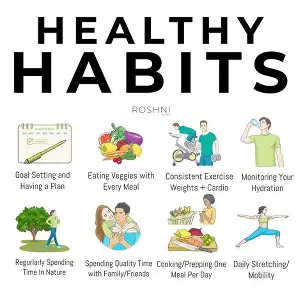

Good and bad habits: How to identify and change them to live a more positive life

Good and Bad Habits: How to Identify and Change Them for a More Positive Life

Good and bad habits: How to identify and change them to live a more positive life
Our daily habits shape who we are. From the moment we wake up to the time we go to bed, much of what we do is driven by automatic behaviors. Some habits support our health and success, while others quietly hold us back.
The good news? You can change your habits. With the right approach, you can break negative patterns and build positive ones that lead to a healthier, more fulfilling life.
Understanding Habits: Why They Matter
Habits are behaviors your brain performs automatically, often without conscious thought. They are formed through repetition and reinforced over time.
Every habit follows a simple loop:
- Cue (trigger): What starts the behavior
- Routine (action): The behavior itself
- Reward: The benefit your brain receives
Understanding this loop is the first step to changing any habit.
Why Bad Habits Are Hard to Break
Bad habits often provide immediate satisfaction—like eating junk food or scrolling on your phone—while their negative effects appear later.
At the same time, good habits (like exercising or reading) require effort upfront but offer long-term rewards.
This imbalance makes it challenging to change behavior. However, with awareness and consistency, it’s absolutely possible to retrain your brain.
6 Proven Steps to Break Bad Habits and Build Good Ones
1. Identify Your Triggers (Cues)
Every habit starts with a trigger. It could be:
- Stress
- Boredom
- A specific time of day
- An environment or situation
Example: Feeling stressed may trigger unhealthy snacking.
What to do:
Track your habits and identify what causes them. Awareness is the foundation of change.
2. Disrupt the Pattern
Once you know your triggers, you can interrupt the habit loop.
Example:
If you hit the snooze button every morning, place your alarm across the room. This forces you to get out of bed and breaks the automatic behavior.
Small changes in your environment can make a big difference.
3. Replace Bad Habits with Good Ones
Simply trying to stop a bad habit rarely works. Instead, replace it with a healthier alternative.
Examples:
- Replace chips with fruits or nuts
- Replace phone scrolling with reading
- Replace sugary drinks with water
This strategy helps your brain form new, positive associations.
4. Keep It Simple
One of the biggest reasons people fail is making habits too complicated.
Tip:
Start small and manageable:
- Read 5 pages instead of a whole book
- Exercise for 10 minutes instead of an hour
Simple habits are easier to repeat—and repetition is what creates lasting change.
5. Focus on Long-Term Benefits
Bad habits often satisfy short-term cravings, but they come with long-term consequences.
Shift your mindset:
- Think about the long-term rewards of your actions
- Remind yourself why you want to change
This helps you stay motivated when progress feels slow.
6. Stay Consistent and Persistent
Habits don’t change overnight. Consistency is the key to success.
Research shows that repeated behavior strengthens neural pathways, making new habits feel more natural over time.
Remember:
- Progress may feel slow at first
- Persistence turns actions into automatic habits
Practical Example: Turning Bad Habits into Good Ones
Imagine you often snack on unhealthy food while watching TV.
Here’s how to change it:
- Identify the trigger: Watching TV in the evening
- Disrupt the habit: Keep unhealthy snacks out of reach
- Replace the behavior: Prepare healthy snacks like fruits or nuts
- Simplify: Have snacks ready in advance
- Stay consistent: Repeat daily
Over time, your brain will adapt, and the new habit will feel natural.
Tips to Build a More Positive Lifestyle
To successfully change your habits, focus on these key principles:
- Start small and build gradually
- Design your environment for success
- Replace, don’t just remove, bad habits
- Stay patient and consistent
- Celebrate small wins
Conclusion

Good and bad habits shape your life more than you might realize. While breaking old habits can be challenging, it’s entirely possible with the right strategy and mindset.
By identifying triggers, replacing negative behaviors, and staying consistent, you can rewire your brain and build habits that support a healthier, more positive life.
Start today—because small changes, repeated daily, lead to big transformations over time.