
How to Quickly Build Muscle: Proven Tips for Proper Training and Nutrition

Building muscle quickly is one of the most popular fitness goals—but also one of the most misunderstood. Many people spend months in the gym without seeing real progress simply because they lack the right strategy.
The truth is, muscle growth (hypertrophy) depends on a combination of smart training, proper nutrition, recovery, and consistency. When these factors work together, your body becomes highly efficient at building lean muscle mass.
In this complete guide, you’ll learn 15 proven tips to build muscle fast, whether you’re a beginner or an experienced lifter looking to break through a plateau.
1. Follow a Structured Workout Plan
One of the biggest mistakes beginners make is training without a clear plan. Random workouts may feel productive, but they rarely lead to consistent results.
A structured workout plan acts like a blueprint for your muscle-building journey. It ensures that every exercise, set, and repetition contributes toward your overall goal. Instead of guessing what to do each day, you follow a system designed to progressively improve your strength and muscle size.
A well-designed program also helps you:
- Target all major muscle groups effectively
- Balance training volume and recovery
- Avoid wasting time on ineffective exercises
- Track progress over time
Without structure, your results will be inconsistent. With structure, every workout moves you forward.
2. Stay Consistent with Your Training
Consistency is the foundation of muscle growth. You can have the best workout plan in the world, but if you don’t follow it regularly, results will be minimal.
Each time you train, your body goes through a cycle of muscle breakdown and repair. With proper nutrition and recovery, your muscles rebuild stronger than before. However, this process only works if you stimulate your muscles consistently over time.
Muscle growth doesn’t happen overnight—it requires weeks and months of steady effort. Even small improvements, like adding one extra rep or completing an additional workout, can lead to significant long-term gains.
Think of consistency as the habit that turns effort into results.
3. Apply Progressive Overload
If you want to build muscle fast, you must continually challenge your muscles. This principle is known as progressive overload.
Your muscles adapt quickly. If you keep lifting the same weight for the same number of repetitions, your body has no reason to grow. Progressive overload forces your muscles to adapt by increasing the difficulty over time.
You can apply progressive overload by:
- Increasing the weight you lift
- Adding more repetitions or sets
- Improving exercise technique
- Reducing rest time between sets
However, progression should be gradual. Increasing intensity too quickly can lead to fatigue or injury. The goal is to challenge your body consistently while allowing enough time for recovery.
4. Track Your Progress Regularly
Tracking your workouts is one of the most effective ways to ensure continuous improvement. Without tracking, it’s easy to lose focus and repeat the same routine without progression.
By keeping a workout log, you can:
- Monitor strength gains
- Identify plateaus
- Stay motivated by seeing progress
- Set realistic goals
Your training log becomes a powerful tool that keeps you accountable. It also helps you celebrate small wins, which are essential for maintaining motivation over time.
5. Focus on Compound Exercises
Compound exercises are movements that target multiple muscle groups at once. Examples include squats, deadlifts, bench presses, and rows.
These exercises are essential for building muscle quickly because they:
- Activate more muscle fibers
- Burn more calories
- Increase strength efficiently
- Stimulate muscle-building hormones
While isolation exercises have their place, compound movements should form the foundation of your workout routine. They provide the most efficient path to building size and strength.
6. Avoid Overtraining
More is not always better when it comes to building muscle. Overtraining can actually slow your progress and increase the risk of injury.
Signs of overtraining include:
- Constant fatigue
- Decreased performance
- Poor sleep
- Lack of motivation
- Persistent muscle soreness
Your muscles grow during recovery—not during the workout itself. Taking rest days allows your body to repair and rebuild stronger muscle fibers.
Balancing training intensity with proper recovery is key to long-term success.
7. Maintain Proper Form and Technique
Using proper form is critical for both safety and effectiveness. Lifting heavier weights with poor technique can lead to injuries and reduce muscle activation.
Good form ensures that:
- The correct muscles are being targeted
- Each repetition is effective
- The risk of injury is minimized
It’s better to lift lighter weights with proper technique than heavier weights with poor form. Over time, this approach leads to better muscle development and safer progress.
8. Eat Enough Calories
To build muscle, your body needs energy. This means consuming more calories than you burn—a concept known as a calorie surplus.
When you eat enough calories, your body enters an anabolic state, which supports muscle growth. Without sufficient energy, your body cannot effectively build new muscle tissue.
A moderate calorie surplus of 250–500 calories per day is ideal for most people. This allows you to gain muscle while minimizing fat gain.
9. Increase Your Protein Intake
Protein is the most important nutrient for muscle growth. It provides the amino acids needed to repair and build muscle tissue.
For optimal results, aim for:
- 1.6–2.2 grams of protein per kilogram of body weight per day
High-quality protein sources include:
- Lean meats (chicken, beef)
- Fish
- Eggs
- Dairy products
- Plant-based options like beans, lentils, and tofu
Spreading protein intake evenly throughout the day helps maximize muscle protein synthesis.
10. Optimize Post-Workout Nutrition
After a workout, your muscles are more receptive to nutrients. This is the ideal time to consume protein and carbohydrates.
A post-workout meal helps:
- Stimulate muscle repair
- Replenish energy stores
- Reduce muscle breakdown
Aim to consume 20–40 grams of protein within a few hours after training for optimal recovery.
11. Consider Creatine Supplementation
Creatine is one of the most researched and effective supplements for muscle growth. It helps increase energy production in muscle cells, allowing you to train harder and lift heavier weights.
Benefits of creatine include:
- Increased strength
- Improved performance
- Enhanced muscle size
A daily dose of 3–5 grams of creatine monohydrate is sufficient for most people.
12. Get Enough Quality Sleep
Sleep is essential for musce recovery and hormone production. During deep sleep, your body releases growth hormone, which plays a key role in muscle development.
Lack of sleep can:
- Reduce testosterone levels
- Increase stress hormones
- Slow recovery
Aim for 7–9 hours of quality sleep each night to support muscle growth.
13. Include Moderate Cardio
Cardio is often misunderstood in muscle-building programs. While excessive cardio can interfere with recovery, moderate cardio can actually improve overall health and performance.
Benefits of cardio include:
- Improved heart health
- Better recovery
- Increased calorie control
Keep cardio sessions short and moderate—around 20–30 minutes, 2–3 times per week.
14. Maintain a Positive Mindset
Your mindset plays a crucial role in your success. Building muscle takes time, patience, and dedication.
Setting clear goals and maintaining a positive attitude can help you:
- Stay motivated
- Push through challenges
- Remain consistent
A strong mindset turns effort into long-term results.
15. Enjoy the Process
Finally, the most overlooked tip: have fun.
If you don’t enjoy your workouts, you won’t stick with them long enough to see results. Find exercises and routines that you genuinely enjoy. This makes consistency easier and transforms fitness into a sustainable lifestyle.
Final Thoughts

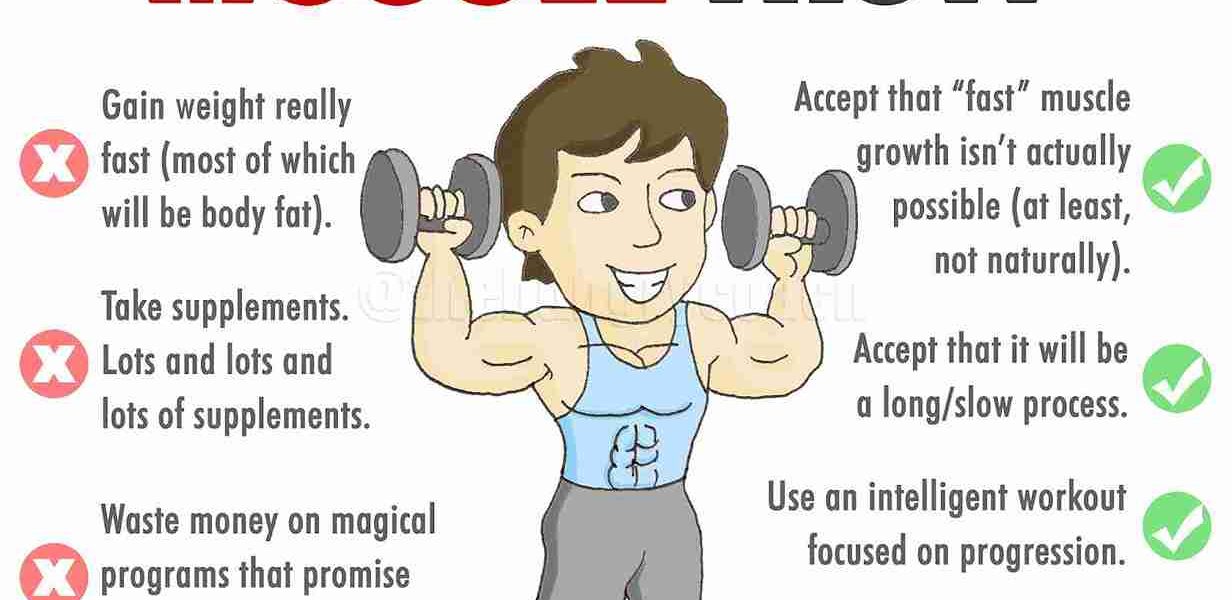
Building muscle quickly is not about shortcuts—it’s about applying the right principles consistently. By focusing on structured training, progressive overload, proper nutrition, and recovery, you can significantly accelerate your results.
Remember:
- Train smart, not just hard
- Fuel your body properly
- Prioritize recovery
- Stay consistent
Muscle growth takes time, but with the right approach, your progress will be faster, more efficient, and sustainable.